
10 Fun Facts about Polish Animals
Updated: May 22

This month's country is known for ancient landscapes, pierogi and the Witcher series. Cześć! We’re visiting Poland. We’ll hike to the peak of Western Carpathian, explore abandoned buildings and participate in conservation projects to find 10 fun facts about Polish animals.
10 Fun Facts about Polish Animals

Tatra marmots are living fossils.
This endangered species originated during the Quaternary period and lives in the highest parts of the Western Carpathians.
9 out of 10 European woodpecker species can be found in The Białowieża Forest.
The Great Spotted Woodpecker is the most commonly spotted and heard; you can hear it from 100 metres away.
Bukovec Mountains villages of snakes.
After Ukrainians were forced from their homes in Operation Vistula, aesculapian snakes moved in and occupied the houses. As humans moved back to the area, they embraced their wriggly friends, who helped remove pests.

What’s that smell?! The common spadefoot toad emits a garlic scent when threatened.
Common spadefoot are a burrowing species found in sandy soil and wetlands across Poland.
Worn by the elite of the Middle Ages and the Renaissance.
The Polish cochineal is a scale insect. Its larvae were harvested to produce the red dye, St John’s Blood.
White storks cause electrical faults in Poland.
They like to nest on top of pylons, which disrupts the electricity supply. Find out what is being done to prevent this.

European bison are starting to make a comeback.
The Białowieża Forest is renowned for the successful reintroduction of the European bison. Before World War One, the Białowieża Forest was the sole home to lowland bison; by 1919, the last bison was killed. Thanks to zoo conservation efforts, it’s now home to the largest population (25% of the world’s).
Praying mantises are spreading throughout Poland.
Global warming is expanding the range of praying mantis moving them into Northern parts of the country.
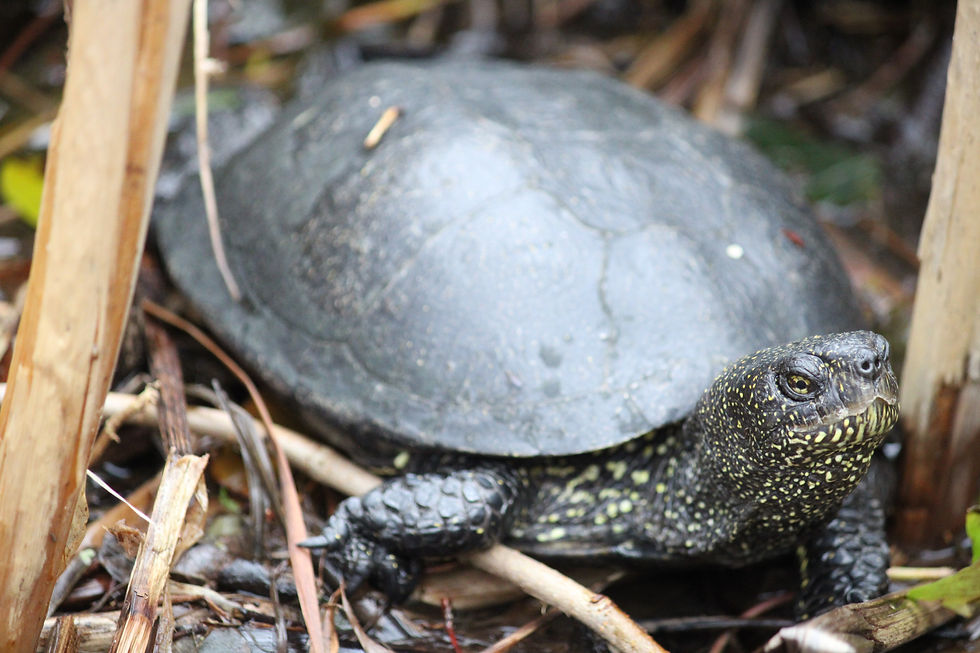
Restoring Poland’s centenarians.
The European pond turtle is Poland’s only turtle species. They are considered extinct in the wild in Lodz Voivodeship, where scientists and conservationists are working to reintroduce the species.
Employee of the Month: The Clams.
Clams are hired in Polish water treatment plants to test water quality. Clams are filter feeders, and if the water isn’t clean, they close, providing real-time insight to engineers. After 3 months, the clams are retired and put back in their natural habitat. How cool!
Pretty cool right? If you're interested in different habitats, check out or dedicated workshop here!


Comments