
Animals from Festive Folklore You May Not Know
- Dec 17, 2025
- 2 min read

Christmas is almost here! With the chilly weather outside and the nights drawing in, now is the perfect time to settle down with a good story. There's no better story to fill the cold nights than some classic folklore, and that extends to Christmas too! So, we thought we'd go through some of our favourite festive stories that feature our wildlife friends!
Animals from Festive Folklore You May Not Know

Reindeer
We couldn’t talk about festive folklore without mentioning Santa and his reindeer! These festive friends have been linked with Santa since at least 1821, when a children’s poem mentioned Santa’s sleigh being pulled by a singular reindeer. Later on, more reindeer were added, eventually leading to the inclusion of Rudolph the red-nosed reindeer in 1949. Reindeer were once revered as mysterious creatures among Scandinavian and Eastern European countries, where populations were large. They are still an essential part of daily life for indigenous populations in northern Europe, like the Sámi people.

Krampus
This one is slightly less jolly than Santa Claus. Half demon, half goat, Krampus comes from German folklore, and his name is derived from the German ‘krampen’, meaning claw. Legend says that Krampus stalks German towns on the 5th December and beats naughty children. When children wake up on December 6th, also known as St. Nicholas Day, children check outside their door to see whether they’ve been left sweets from St Nicholas or a rod from Krampus.

Yule Cat
Yule Cat, or Jólakötturinn, stalks the wintery landscapes of Iceland. Preying on lazy townspeople, our fuzzy feline towners above buildings and the legend behind them links back to an important trade in Iceland – Sheep farming. In the 19th Century, sheep farming was an essential part of daily life, with the whole town needed to work together to keep alive during brutal winters. Preparing wool contributed so much to the Icelandic economy, and preparing the wool for winter was a whole town affair. Those who helped out were rewarded with new clothes, and those who were lazy did not. So, Yule Cat would roam the towns at night, feasting on those that hadn’t received new clothes that year.
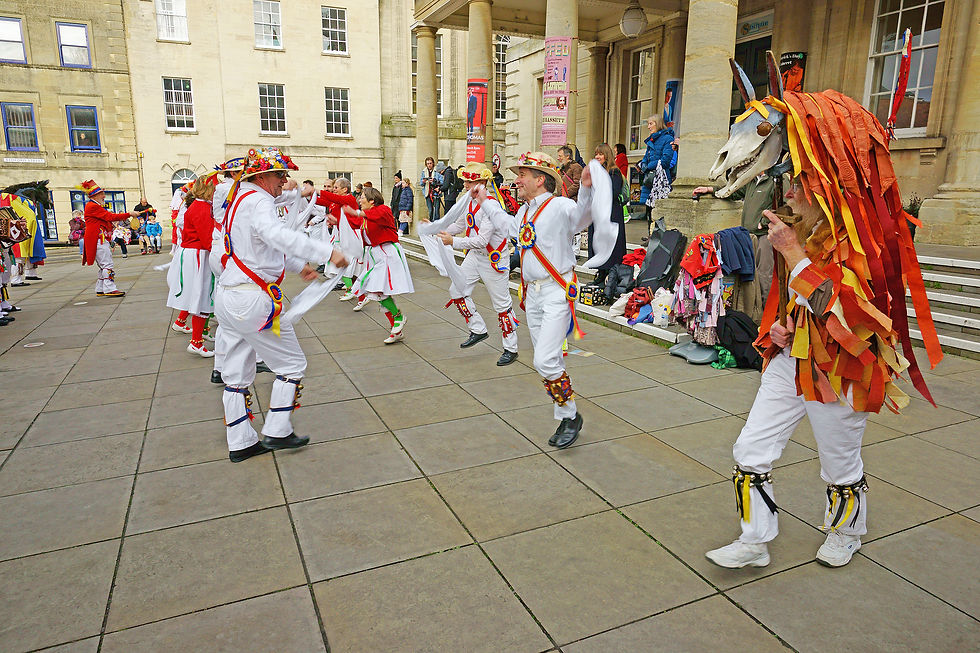
Mari Lwyd
This festive animal loves closer to home, coming from the hills and valleys of Wales. She appears as a spooky horse, complete with horse skull head, lights for eyes, colourful streamers or ivy as a mane, and a long pole that is controlled by someone underneath. Some believe that her name simply means ‘Grey Mare’ linking to Pale Horses in Celtic mythology, while others believe it translates as ‘Grey Mary’, and comes from a version of the Nativity story where a pregnant mare was also looking for somewhere to give birth. Now, Mari Llwyd roams the land looking for somewhere to birth her foul. On Christmas and Twelfth Night, she goes from house to house with ostlers, jesters, or Ladies, singing in Welsh and telling rude rhymes. If Mari gets entry, the household is said to have good luck for the next year, but beware, Mari Lwyd is known to be very mischievous!
Want to learn more about animals from folklore? Ask us about our Myths & Legends workshop!


Comments