
How Scientists Are Inspired By Nature

Animals are experts at adaptations. These allow populations to survive and thrive in different habitats, and humans have often been inspired by them. This is biomimetics! Biomimetics is the branch of science that examines concepts in nature to inspire engineers to solve human problems. We’ve looked at some of our favourites, read on and let us know yours!
How Scientists Are Inspired By Nature

Spiders
During Roman times, spider silk was used as a seal to cover wounds. It is flexible yet strong, which helps it stretch over them and create a seal. Spider silk is also as strong as steel yet incredibly flexible. It has tensile strength and can absorb a lot of energy before rupturing. So, how has this material been used by nature-inspired engineers?
Bulletproof vests! They have to withstand a significant impact without injuring the wearer. So, scientists have created artificial spider silk with properties very similar to those of natural spider silk, which they used to create bulletproof vests. It can also help produce surgical thread and artificial ligaments.
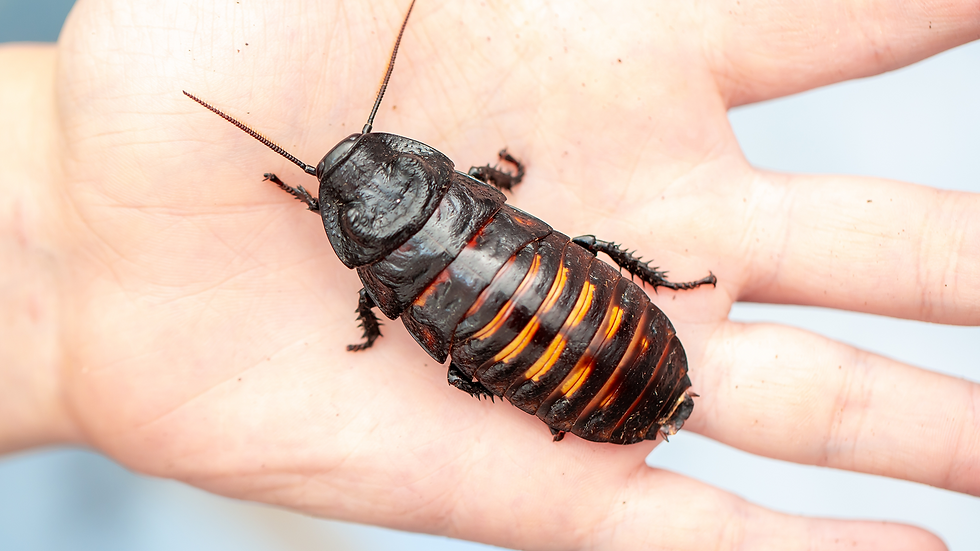
Cockroaches
These little critters can move at speed through rough terrain and very small gaps, even when surfaces and objects are touching both sides of their body. Engineers discovered that they can tilt their bodies when sliding through small gaps or openings without expending extra energy.
There is value in turning this design into a similar-sized robot. A robot that can be operated from afar - from a remote control – and fitted with a recording device and camera. A cockroach robot is really useful for undercover work, such as espionage for organisations like MI5. Perhaps it may be a war-torn area where it is dangerous to send in a human being. Who is going to notice a cockroach robot that looks like....well, a cockroach!

Snail
Snails may seem like they fit nicely in humid environments like forests and gardens, yet you can find them all over the world, including deserts! You may ask yourself how they deal with the heat and the direct sun - we know snails are at risk of drying out. In the desert, snail shells are a different shape, with a slightly different aperture to keep the opening flat with the ground, preventing further moisture loss. The shell itself has ample space at the base, allowing for good airflow!
The design of a desert snail shell not only means good air flow, but the colouring of the shell is also light, almost white! These colours reflect all wavelengths of light and therefore absorb the least heat, while black absorbs all wavelengths of light and reflects none. So the desert snail shell has multiple methods for keeping cool, including a different colour from that of many snail shells. Architects have designed human desert dwellings based on this design because of the excellent air flow from the shape of the shell and the colour

Frog
If you’ve ever had to go through stomach surgery, you may well have had an ingenious design wandering around in your stomach. Tree frogs are arboreal amphibians with special toe pads that allow them to stick to many different surfaces. Their feet have hexagonal patterned channels that, when in contact with a wet surface, build an adhesion force. It is the same kind of idea as a Coke glass sticking to a beer mat!
Scientists at Leeds University designed a tiny robot to move across the patient's internal abdominal wall, allowing surgeons to see what they are doing on a real-time video feed. The tree frog's feet provide a solution to the critical problem of keeping the device from slipping off wet, slippery tissue when it is vertical or upside down. Although it is relatively easy to find ways to stick to or grip tissue, the patterns on the frog's feet allow holding and releasing a grip without harming the patient. So a ribbiting robot - who knew!

Snake
On a snake's upper body, the scales are diamond-shaped, and on the underside, they are rectangular-shaped and overlap. So, why are they shaped like this? Well, the scales are diamond-shaped to provide a tough exterior for protection and waterproofing. The scales underneath overlap to reduce friction when the snake is in motion and to provide maximum resistance to wear and tear.
If you looked at a snake's scales under a microscope, you would find small hairs called fibrils on the scales. When a snake moves, it grips and pushes down with one part of its body while the other part slides forward. Scientists have found that there are many fibrils on the part of the body that needs to push down, and very few on the part that slides forward. These fibrils are incredible adaptations that allow the snake to move without legs. Expert friction control and durability make snake and lizard skin highly desirable to engineers seeking to build those characteristics into machines.
Eventually, replica reptilian materials could find use in high-end automotive engineering, such as Formula One race cars, or in the next generation of search-and-rescue and exploration robots modelled after snakes.

Rats & Gerbils
Rats are scavengers and can breed incredibly quickly. A female rat can produce up to 7 litters per year, totalling around 84 offspring. There is a relationship between the number of people and the number of rats, as population numbers go up, so does the rat population. You may have seen reports during the COVID lockdowns, when people were shut away, and there was less food waste in the usual places where rats were seen out in the day.
Male rats release a pheromone to attract females, and scientists have been able to recreate this exact smell and composition synthetically using chemicals. In the suburbs of New York, baited boxes were placed around the city that contained synthetic rat pheromone, attracting many female rats. In addition to the artificial pheromone, the box contained food for the female rat. The food was laced with contraceptives, preventing the rat from getting pregnant. This was an ingenious design to control the rat population without harming them.
Interested in learning more? Check out our dedicated Biomimetics workshop!


Comments