
The World's 5 Strangest Snakes

It's World Snake Day! Snakes are among the most fascinating reptiles on Earth, but some species stand out for their truly extraordinary adaptations.
In this blog, we'll explore the world's five strangest snakes. Discover where these unusual snakes live, what makes them so unique, and the remarkable adaptations that have earned them a place among the world's most amazing reptiles.
The World's 5 Strangest Snakes

Flying Snake
So, we did lie a bit here. These snakes can't actually fly, they're more like gliders! They basically free-fall from tree to tree, contorting their body to control their movements. The different movements help them trap air and soar instead of plummeting straight to the ground. Don't worry, though, there's no chance of a rogue flying snake landing on you. they only live in the jungles of South and Southeast Asia.
Malagasy Leaf-Nosed Snake
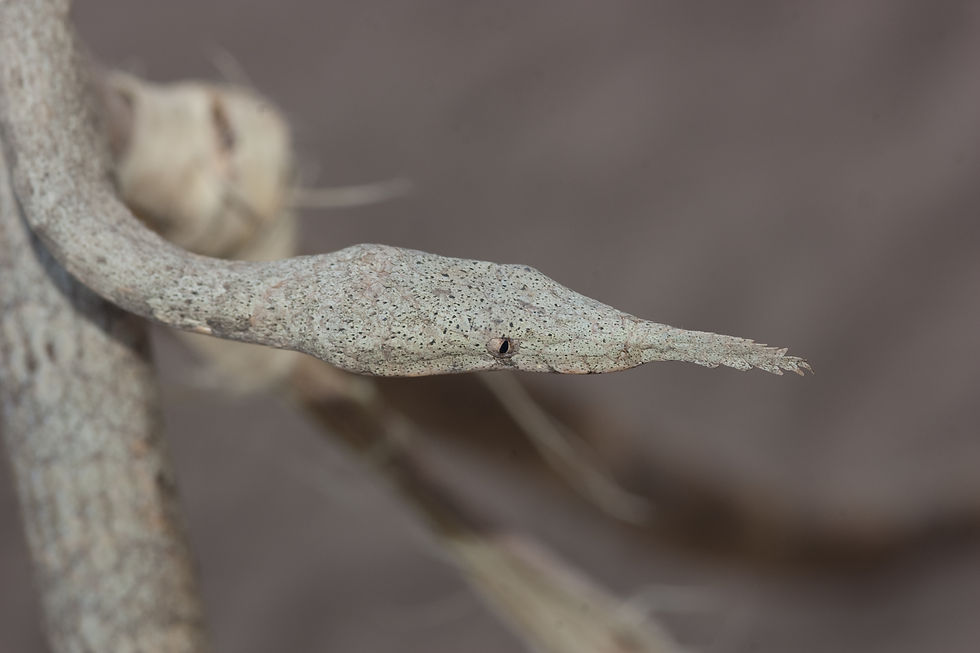
These snakes get their name from the flat shape of their nose. Sexual dimorphism means that it's only the females of the species that have the leafy appendage. Why their nose is shaped like that is unknown but is most likely to help them blend in with their jungle habitat.

Spider-Tailed Horned Viper
This spikey fella looks like it was ripped straight out of a fantasy book - but they're real! Their spikey tails have the appearance of a spider, and they lurk on the mountainsides of Iran, using their tails to lure in birds. Their mottled grey scales help them blend in with the rocky terrain and their bite is venomous, making them perfect hunters!

Sea Snake
That's right, snakes live in the water too! There are over 60 recognised species of sea snake across the world, but they mainly live in the shallow tropical waters of the Pacific and Indian Oceans. They've evolved brilliantly over millions of years to thrive in this habitat, including flattening the end of their tail into a paddle and having an organ in their mouth that helps excrete excess salt from the seawater they live in. They even give birth to live young in the water!

Rattlesnake
We couldn't write a list about snakes without mentioning one of the strangest - the rattlesnake! Their distinctive rattle sound comes from their hollow tail tip. It contains hard doughnut-like segments that rattle as their tail shakes. They do this to warn off predators and distract prey.


Comments